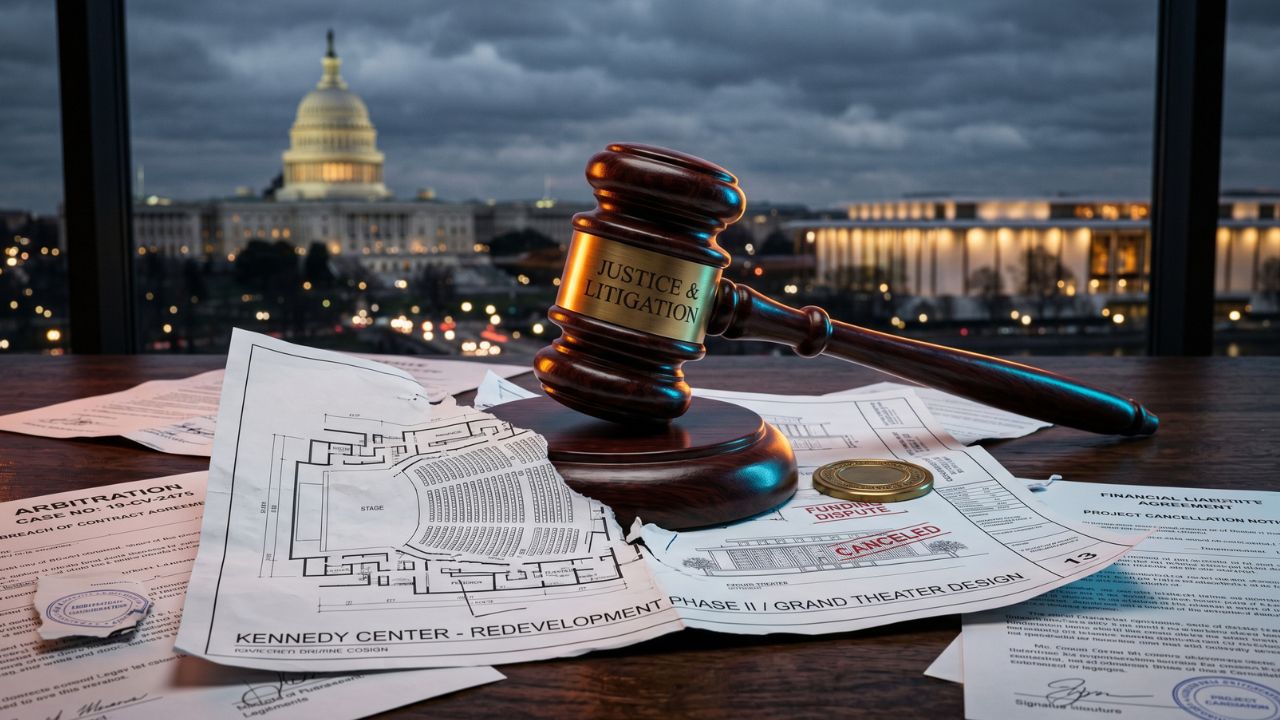

The Judicial Blockade: An Unprecedented Administrative Shift
In a ruling that has sent shockwaves through Washington’s contracting and investment sectors, a federal judge has effectively blocked the Trump administration’s ambitious, multi-million-dollar renovation plans for the Kennedy Center, simultaneously ordering the removal of the President’s name from the iconic venue. In immediate retaliation, the administration announced the transfer of the institution’s operational, maintenance, and management control directly to Congress.
For corporate lawyers and institutional investors holding debt or contracts tied to the venue’s overhaul, this abrupt administrative pivot is not merely political theater—it is a trigger event for massive civil liability. The sudden halt of a planned two-year closure and the cancellation of major infrastructural additions, including a highly anticipated new ballroom, immediately threatens the financial stability of construction consortiums, underwriters, and third-party vendors.
Catalyst for Severe Fiduciary Exposure
When management transitions occur under the duress of a court order, the immediate concern for corporate boards and investment funds backing the contractors is fiduciary exposure. The sudden transfer to Congressional oversight leaves a vacuum of immediate administrative authority, leaving existing contracts in a state of perilous limbo. Investors and bondholders will demand accountability for the stranded capital, forcing corporate counsel to rapidly assess whether the managing entities breached their fiduciary duties by failing to secure rock-solid contingency clauses against sovereign or administrative interference.
Contractual Fallout and Mass Tort Vulnerabilities
The abrupt termination of the renovation plans paves the way for extensive class action litigation. Subcontractors, laborers, and material suppliers who committed resources based on the promised two-year renovation timeline are poised to consolidate their grievances. When federal projects of this magnitude are derailed overnight, the ripple effect exposes managing agencies and primary contractors to acute mass tort vulnerabilities, particularly concerning sudden mass layoffs, breach of implied operational covenants, and economic damages suffered by local supply chains.
Litigators representing these aggrieved parties are already strategizing to pierce the veil of sovereign immunity, framing the abrupt transfer of power not as an administrative prerogative, but as an intentional interference with contractual relations. For corporate defenders, mitigating this risk requires immediate defensive restructuring and aggressive negotiation to prevent a cascade of unified lawsuits.
The Role of the Structured Settlement Buyer in Mitigation
As corporate defendants and their insurers face the reality of funding massive payouts to breached contractors, liquidity becomes a primary concern. In scenarios where prolonged litigation threatens to drain corporate reserves, defense counsel may advise leveraging a structured settlement buyer. By offloading long-term payment obligations to specialized financial entities, primary contractors can maintain immediate operational liquidity while ensuring that plaintiffs receive their mandated payouts over time. This financial maneuvering is critical for large construction firms seeking to survive the sudden voiding of a marquee federal contract.
Moving forward, the primary focus for defense teams will be aggressively triaging incoming settlement claims. The transition of control to Congress means that any negotiated payouts will likely be subject to intense legislative scrutiny and budgetary delays. Corporate counsel must advise their clients to seek expedited arbitration pathways rather than waiting for congressional appropriations to fund breached contracts.
The Kennedy Center injunction serves as a stark warning to commercial litigators and investment funds: public-private partnerships and federally adjacent contracts carry latent, explosive risks. The failure to anticipate sudden judicial reversals and administrative abandonment can transform a lucrative infrastructural contract into a devastating legal quagmire.